
K-Pop, C-Pop, J-Pop and Thai entertainment each operate under a completely different commerce logic.
K-Pop, C-Pop, J-Pop and Thai entertainment each operate under distinct fandom commerce logics — differing in fan spending behavior, platform infrastructure, and the brand categories that perform best in each community. A brand strategy that works inside one genre will not automatically transfer to another.
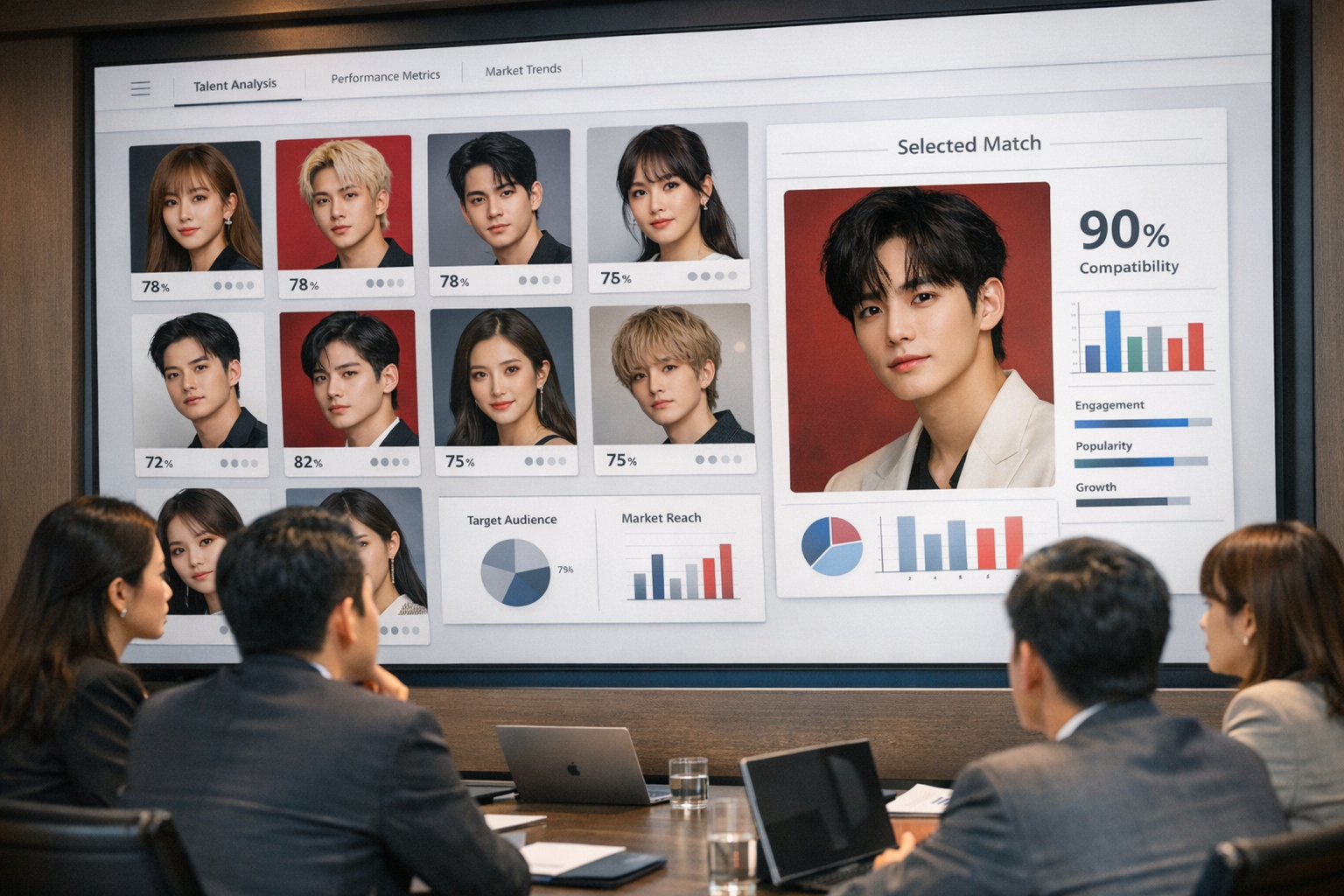
Not all fandoms are built the same. A brand that thrives in a K-Pop partnership may struggle inside a J-Pop community if it does not understand the fundamentally different commerce logic at play. Across Asia's four dominant entertainment genres — K-Pop, C-Pop, J-Pop, and Thai entertainment — fandoms differ in structure, spending behavior, platform preferences, and the role they expect brands to play.
For brand strategists building Asia entertainment partnership plans, genre selection is a strategic decision, not an aesthetic preference. The genre you choose determines the community you're entering, the fit criteria that matter, the partnership structures available to you, and the commercial outcomes you can realistically expect.
This analysis gives you the framework to make that decision correctly. Each section maps the commerce logic of one genre — its fan infrastructure, spending behavior, brand fit profile, and regional footprint. It closes with a side-by-side comparison and a decision matrix to help you identify the right genre for your brand.
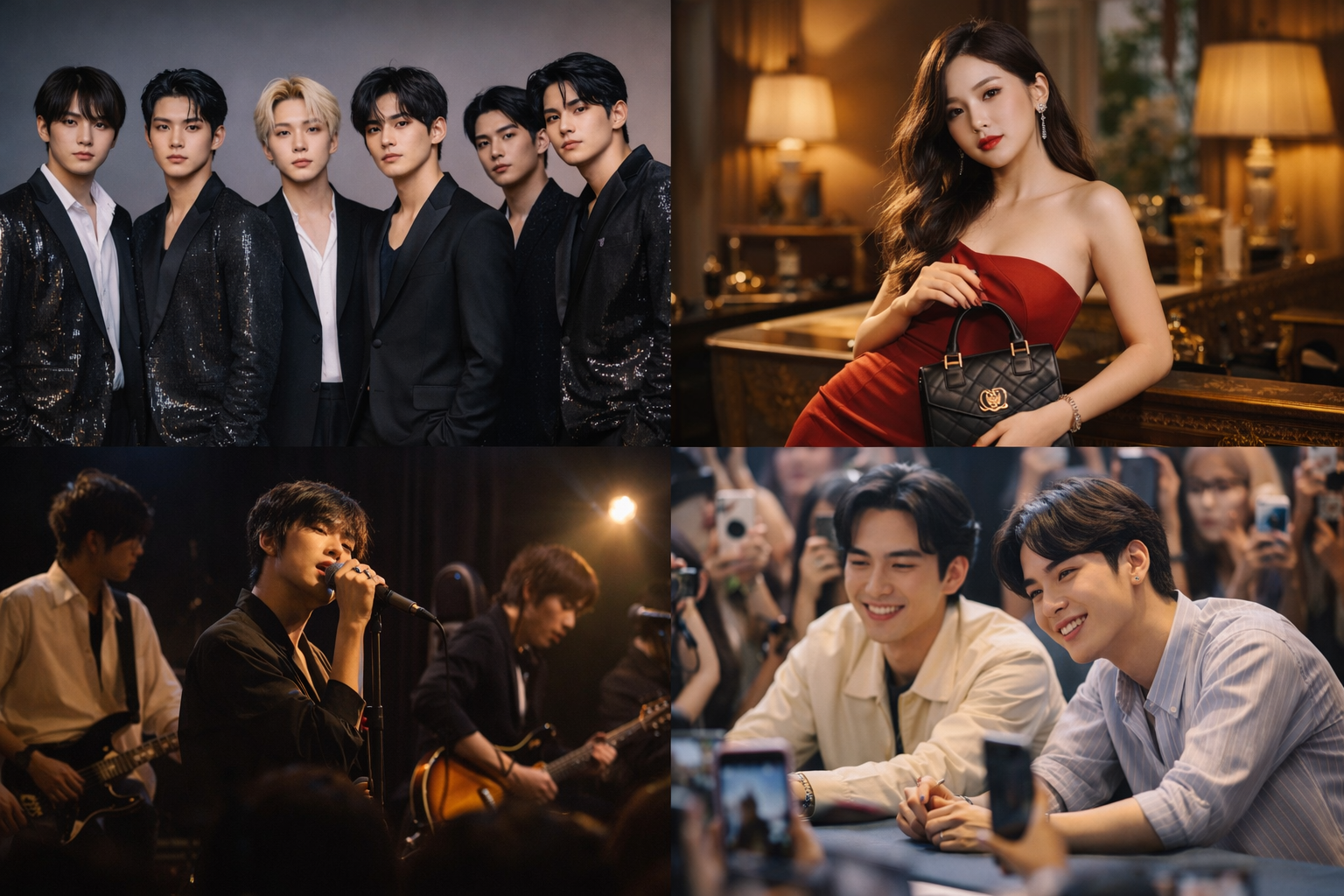
Why Each Genre Has Its Own Commerce Logic
The surface-level observation is that K-Pop, C-Pop, J-Pop and Thai entertainment all involve passionate fan communities around music and entertainment artists. The commercially important reality is that the mechanisms through which those fans generate brand value are completely different.
Commerce logic refers to the specific combination of fan behavior patterns, platform infrastructure, spending triggers, community structure, and brand integration norms that determine how commercial outcomes are generated within a fandom. Getting the commerce logic right is what separates a brand partnership that drives measurable conversion from one that produces beautiful content and disappointing results.
Commerce Logic: The genre-specific combination of fan spending behavior, platform infrastructure, community structure, and brand integration norms that determines how — and how much — commercial value a fandom economy generates for participating brands.
The combined addressable market across these ecosystems is explored in detail in our fandom commerce market size report.
K-Pop — The Global Template
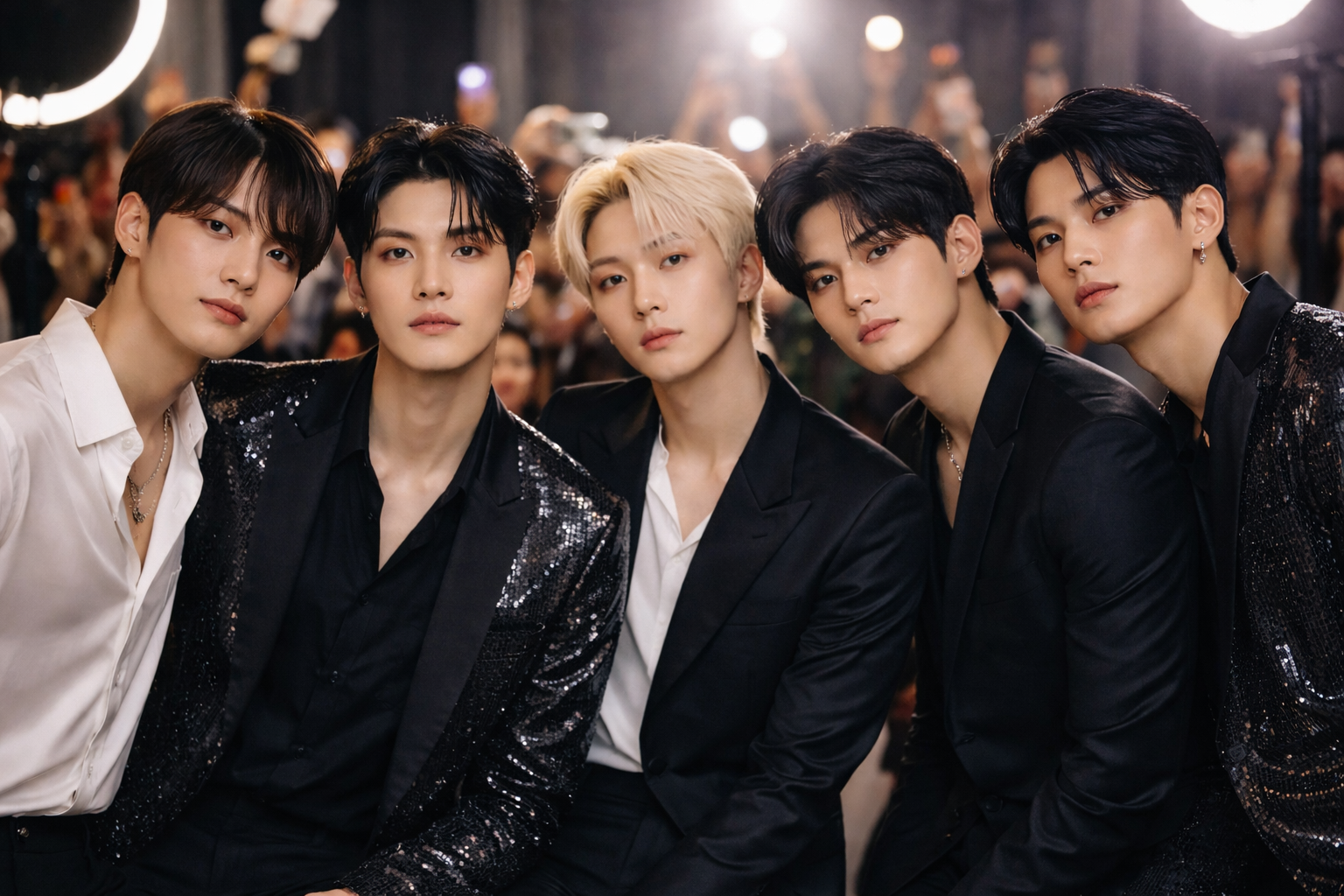
K-Pop has built the world's most internationally scalable fandom commerce infrastructure. Its commercial mechanisms — album pre-orders with fan-exclusive bonuses, photo card collecting economies, fan voting campaigns tied to brand sponsorships, fan café culture, and parasocial 'group member' dynamics — are not accidental features of the genre. They are deliberate systems engineered to generate sustained fan spending and commercial engagement.
Fan Infrastructure and the Parasocial Economy
The K-Pop fan infrastructure operates on a parasocial economy model: fans invest emotional resources in artist relationships that feel personal, and that emotional investment drives commercial behavior. Albums are purchased not primarily to listen to, but to collect, to support chart positions, and to access limited physical content. Branded products are purchased to demonstrate fandom membership and support the artist. This is why K-Pop fans spend at rates that are structurally higher than general entertainment audiences.
The fan club infrastructure — platform-based communities like Weverse and Lysn, plus highly organized Twitter/X and Instagram fan accounts — creates a community communication network that amplifies brand messages at scale when the community accepts the brand as culturally aligned.
Best Brand Categories for K-Pop Partnerships
K-Pop's strongest brand partnership categories are beauty and skincare (driven by genre's strong visual culture and beauty-standard associations), food and beverage (particularly in ASEAN where fan food events and brand café collaborations are commercially significant), fashion and streetwear, and technology products that resonate with the genre's digitally engaged demographic.
The brand competition in K-Pop is highest across all four genres. For Tier 1 global acts, most commercially obvious categories are already partnered. The strategic opportunity for many brands is in Tier 2 and Tier 3 acts — where brand competition is lower, fandom community engagement is often comparable, and partnership costs are significantly more accessible.
Brands entering these ecosystems need to understand how K-Pop brand partnerships are structured before committing budget across any market.

C-Pop — Scale and Domestic Firepower
C-Pop's fandom economy operates through a different infrastructure to K-Pop — one built primarily on China's domestic streaming and social platforms rather than globally accessible channels. Weibo, Douyin, Bilibili, and QQ Music are where C-Pop fan communities are most commercially active, and brands that want to access this economy need to understand how these platforms shape fan spending behavior.
The Role of Chinese Streaming Platforms in Fandom Commerce
Chinese streaming platforms have integrated fan commerce mechanics directly into their product experience. Fans can purchase digital gifts, pay for exclusive artist content, participate in platform-run voting campaigns, and access fan-exclusive commerce experiences — all within a single integrated ecosystem. This creates a fandom commerce infrastructure that is, in some respects, more commercially efficient than K-Pop's more fragmented cross-platform model.
The commercial implication for global brands is that C-Pop partnerships are most commercially powerful when they intersect with these platform mechanics. A C-Pop brand partnership that lives only on Instagram is missing the majority of the fandom commerce action.
Brand Considerations for C-Pop in ASEAN and GCC
Outside mainland China, C-Pop fandom communities in ASEAN — particularly in Singapore, Malaysia, and among Chinese diaspora populations across the region — and in the GCC are growing in commercial significance. These markets offer global brands a route into C-Pop fandom commerce without the platform complexity of mainland China.
Brand categories with the strongest C-Pop fit in ASEAN and GCC diaspora markets include luxury goods, skincare and personal care, education technology, and premium consumer electronics. The C-Pop fandom in these markets is, on average, a higher-income demographic than the ASEAN K-Pop fandom, which shifts the optimal brand category profile.

J-Pop — The Precision Loyalty Market
J-Pop operates according to a commerce logic that is fundamentally different from both K-Pop and C-Pop — one built on depth of loyalty rather than breadth of community engagement. J-Pop fan communities are more intimate, more curated, and more category-specific in their brand receptivity.
Why J-Pop Fans Behave Differently
J-Pop's fandom culture is shaped by a Japanese entertainment industry model that historically prioritized physical media, physical fan events, and intimate fan-artist relationships through mechanisms like handshake events, theater performances with limited audience capacity, and physical-only merchandise. This has created a fan community that is deeply loyal, highly spending within specific categories, but less likely to broadly amplify brand messages across social media in the way K-Pop communities do.
The commercial implication is that J-Pop partnerships generate different ROI profiles than K-Pop. The earned amplification rate — the volume of organic fan-driven social sharing — is lower. But conversion rates among engaged fan segments are higher, and brand loyalty transfer is more durable once community acceptance is achieved.
Which Brand Categories Win in J-Pop Partnerships
Gaming companies, technology brands, anime-adjacent fashion labels, certain food and beverage categories (particularly where Japanese cultural associations enhance brand credibility), and luxury goods with Japanese market ambitions are the strongest performers in J-Pop brand partnerships. Brands that have achieved strong J-Pop partnership outcomes share one characteristic: they approached the community with genuine cultural respect rather than treating J-Pop as an extension of their K-Pop strategy.
Thai Entertainment — The Underrated Regional Force
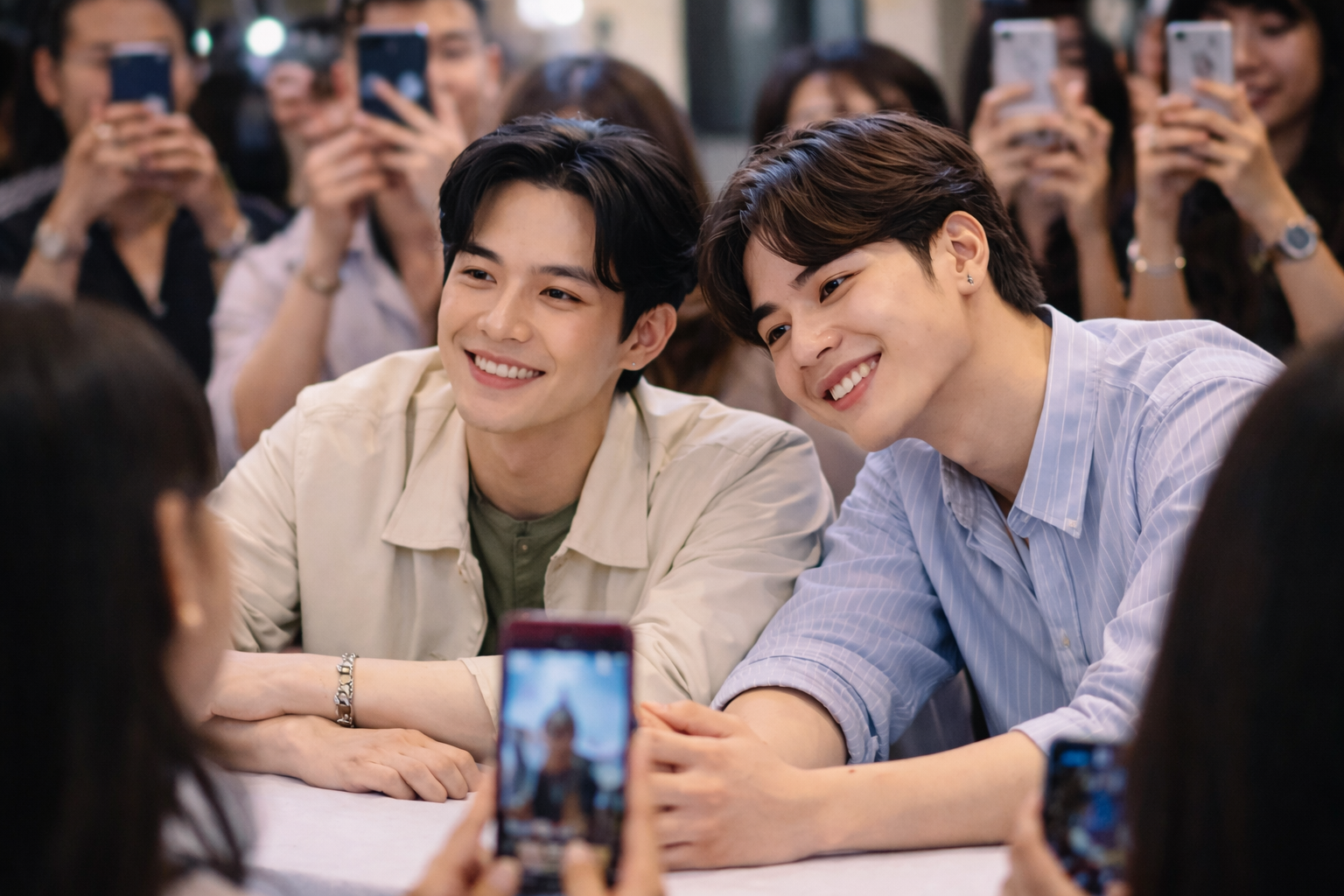
Thai entertainment — led by GMMTV, the BL genre, and an emerging cohort of Thai pop artists — is the most commercially undervalued fandom economy genre that WENOTIFT tracks. Its fan communities are highly activated, its brand partnership infrastructure is developing rapidly, and its brand competition is a fraction of K-Pop's.
GMMTV, BL Series and the New Thai Fandom Wave
GMMTV has built the most commercially sophisticated Thai entertainment brand partnership infrastructure through its roster of actors — many of whom became internationally recognized through BL series. These actors have fan communities that are organized, spending, and commercially active across Indonesia, the Philippines, Vietnam, Taiwan, Japan, South Korea, and increasingly the GCC.
The BL genre's unexpected international reach has created a fan community infrastructure that operates at a significantly larger scale than Thai entertainment's brand partnership market currently recognizes. The commercial opportunity in this gap — between community size and brand penetration — is one of the clearest undercapitalized positions in Asian fandom commerce.
Why Thai Fandoms Punch Above Their Weight Commercially
Thai entertainment fan communities demonstrate several commercially advantageous characteristics that make them disproportionately valuable for brand partnerships: high collective purchasing behavior (including coordinated support campaigns), strong cross-platform amplification across Instagram, Twitter/X, TikTok, and YouTube, above-average brand receptivity toward partnerships that feel authentic to the community, and fast-growing regional footprint across markets where brand competition for Thai entertainment is minimal.
For brands looking to build fandom economy positions without the cost premium of K-Pop Tier 1 acts, Thai entertainment represents the clearest combination of community activation quality and brand competition vacancy. For the full 2025 market analysis of Thai entertainment's commercial trajectory, see: The Rise of Thai Entertainment in Global Brand Deals.
Side-by-Side Comparison: The Four Fandom Commerce Profiles
| Dimension | K-Pop | C-Pop | J-Pop | Thai Ent. |
|---|---|---|---|---|
|
Fan Spending Level
▶
|
Very High | High | High (niche) | Medium–High |
|
Social Amplification
▶
|
Very High | Medium | Low–Medium | High |
|
Brand Competition
▶
|
Very High | Medium | Medium | Low |
|
Community Fit Requirement
▶
|
High | High | Very High | Medium |
|
Primary Region
▶
|
Global / ASEAN | Greater China / ASEAN diaspora | Japan + select ASEAN | ASEAN / GCC growing |
|
Best Brand Categories
▶
|
Beauty, F&B, Fashion, Tech | Luxury, Skincare, EdTech | Gaming, Tech, Luxury | F&B, Fashion, Beauty |
|
First-Mover Window
▶
|
Narrowing
Mature market
|
Open — ASEAN/GCC
Expansion window
|
Niche openings
Selective plays
|
Wide open
Fast-growth opportunity
|
How to Choose the Right Genre for Your Brand
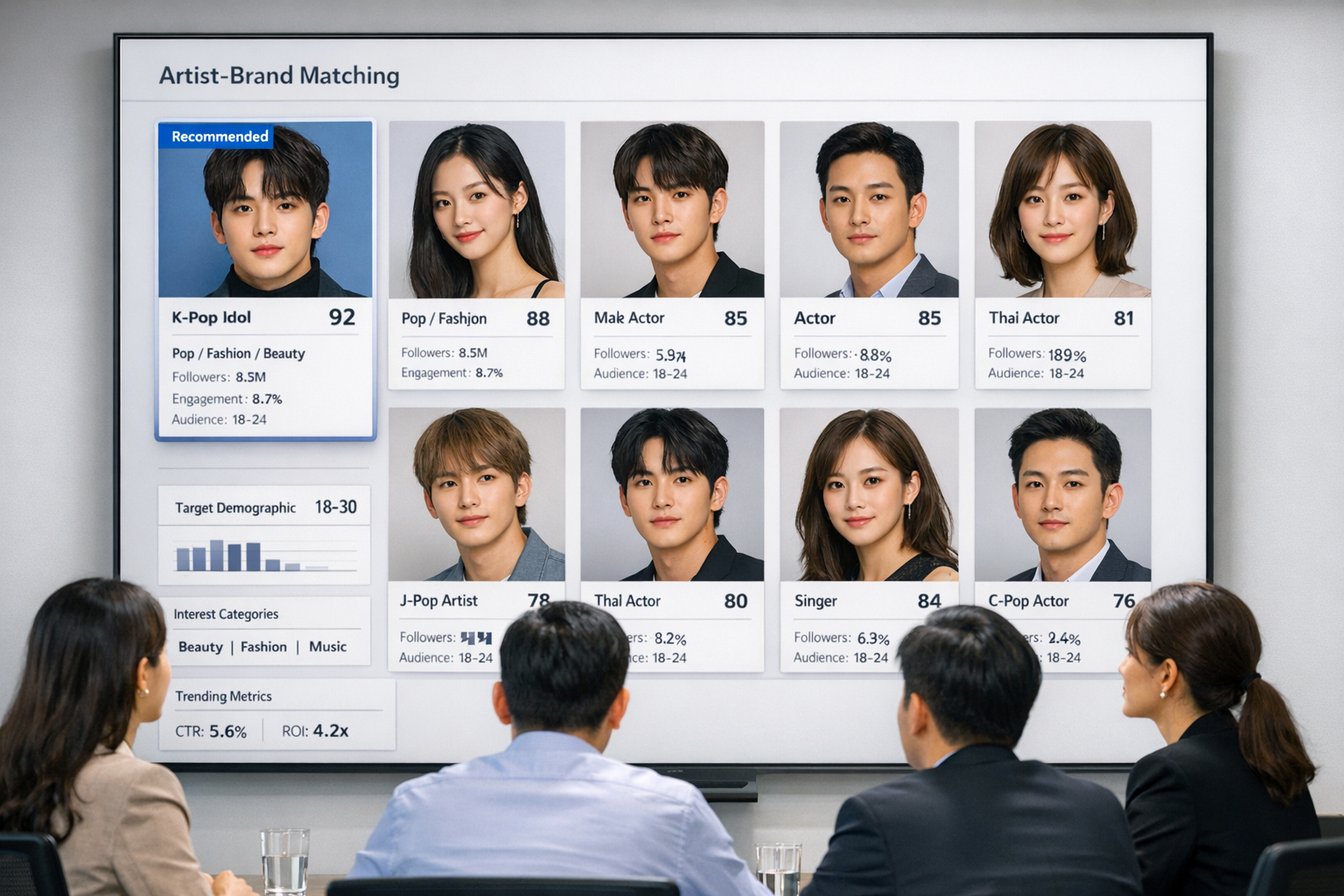
The most effective fandom economy strategies WENOTIFT architects for clients are not single-genre plays. They are multi-genre approaches calibrated to the brand's regional ambitions, budget structure, and commercial timeline — using K-Pop for immediate scale, Thai entertainment or C-Pop for first-mover positioning, and J-Pop for precision loyalty in specific markets.

Let's turn cultural insight into partnership strategy.
Talk to WENOTIFT about the right artist, market, and commercial structure — and how to build partnerships that compound brand equity across ASEAN, APAC, and GCC.