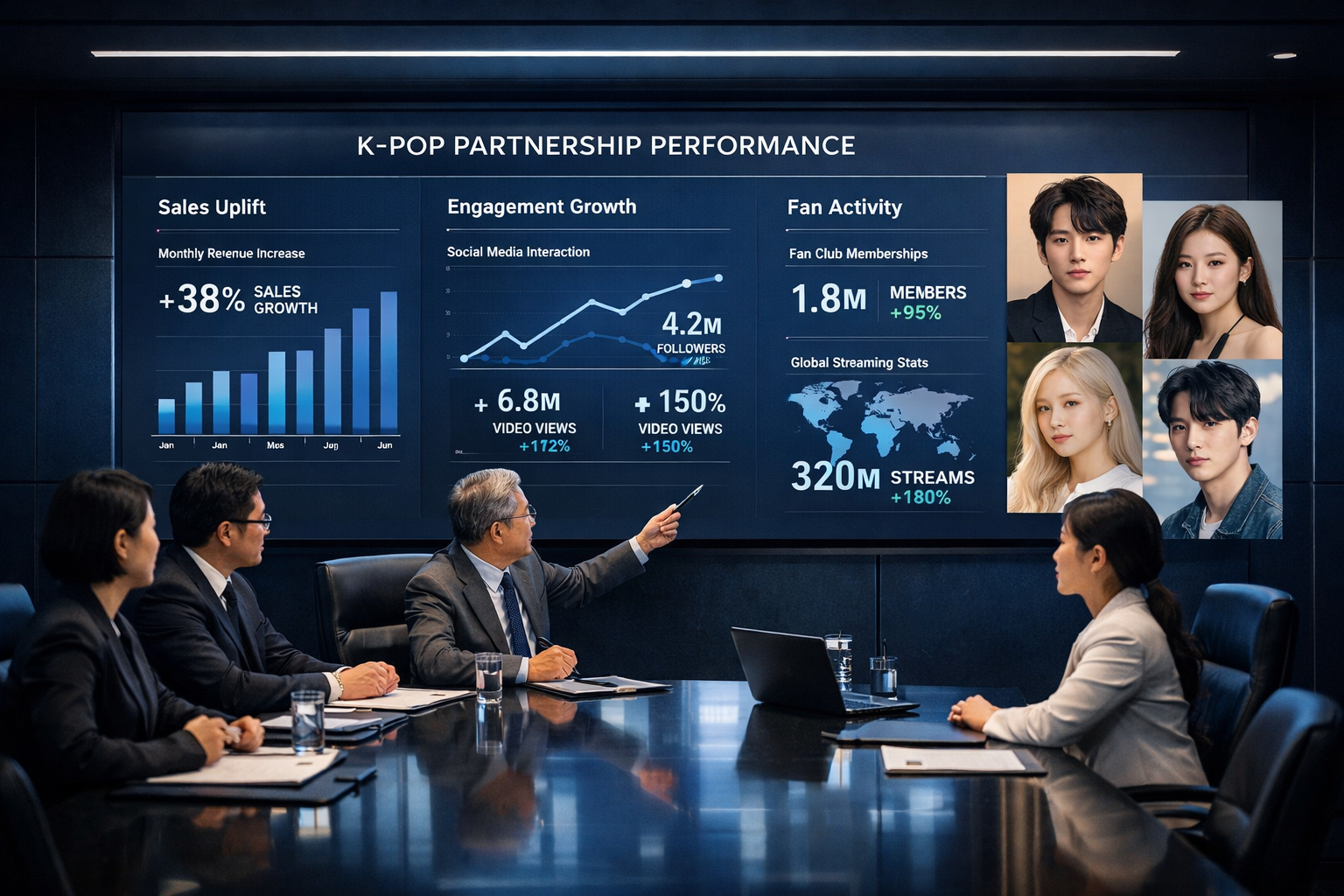
Here are 25 statistics every marketer needs before entering K-Pop brand partnerships in 2026 — covering market size, fan spending behavior, engagement benchmarks, and GCC growth data.
WENOTIFT's 2026 market analysis identifies K-Pop brand partnerships as generating measurably higher commercial outcomes than traditional celebrity endorsement across every tracked metric: engagement, recall, conversion, and long-term brand loyalty.
Numbers tell the story that intuition cannot. As global brands increasingly look to K-Pop and Asia's wider fandom economies to drive meaningful commercial outcomes, the gap between brands operating on data and those operating on assumptions is growing. These 25 statistics cut through the noise and give marketers, strategists, and brand leaders the hard evidence they need to make the case — and make the right moves.
This is not a collection of vanity metrics. Every statistic in this guide connects to a commercial decision: market entry, budget allocation, partner selection, campaign structure, or ROI measurement. Each has an 'What It Means for Brands' context so the data translates directly into strategic action.
Market Size Statistics: How Big Is the K-Pop Brand Partnership Economy?
K-Pop is no longer just a music genre — it is a fully operational commercial ecosystem wheK-Pop has evolved into a scaled commercial ecosystem where fandom behavior translates directly into economic value. What appears as entertainment on the surface is, in reality, a structured market spanning content, merchandise, and brand partnerships.
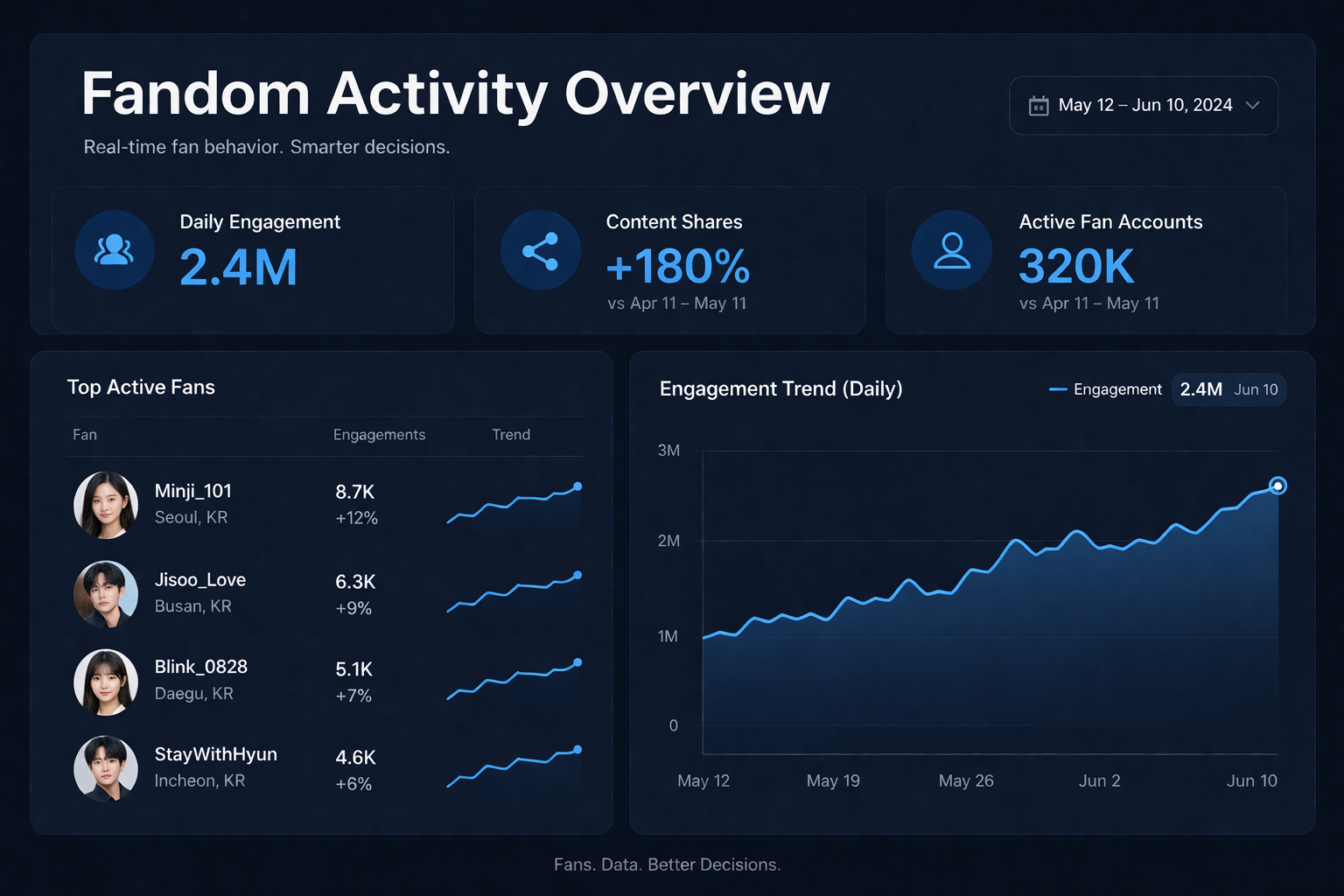
For brands, these numbers don’t just indicate audience size — they define the total infrastructure behind every deal, collaboration, and campaign executed within the K-Pop economy.
Fan Spending Behavior Statistics
Understanding how K-Pop fans spend is more commercially useful than understanding how many of them exist. These five statistics reveal the behavioral patterns that translate directly into brand partnership ROI.
Brand Partnership Performance Statistics
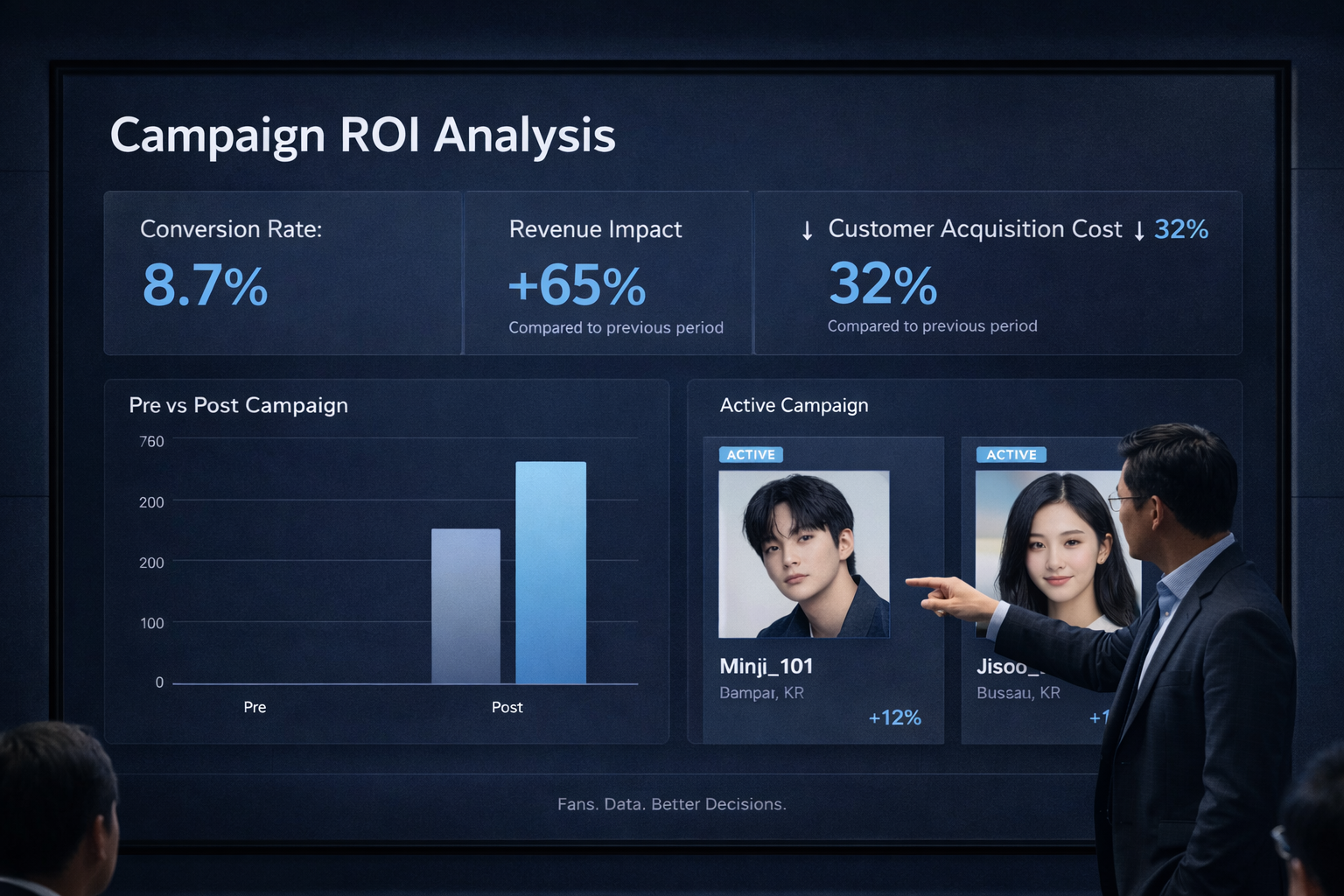
The brands generating the highest return from K-Pop partnerships are not the ones with the largest budgets — they are the ones using culture-commerce intelligence to select partners, structure deals, and measure outcomes that matter.
These statistics directly answer the ROI question that every marketing director asks before approving a K-Pop partnership budget.
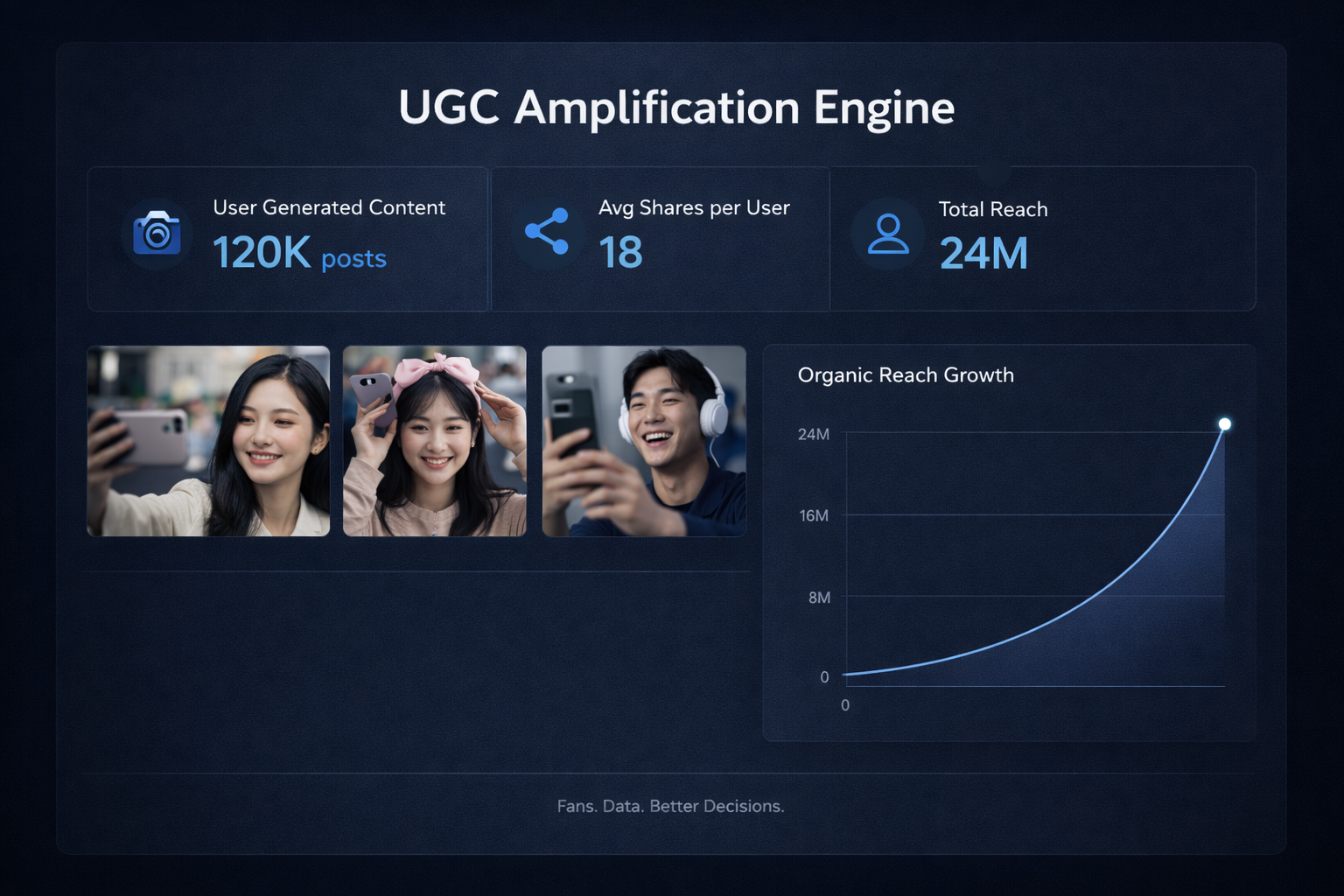
DEFINITION — EARNED AMPLIFICATION RATE
The ratio of organic, community-driven reach (fan accounts sharing content without payment) to paid campaign reach. A 340% earned amplification rate means for every 1,000 people reached through paid media, 3,400 more are reached through voluntary community sharing. This metric is WENOTIFT's primary differentiator between fandom commerce and traditional media buying.
Platform and Digital Statistics: Where the Commercial Action Happens
K-Pop’s commercial power is concentrated at the platform level, where content, community, and commerce are tightly integrated. These ecosystems are not just distribution channels — they are environments designed to convert engagement into measurable economic activity.
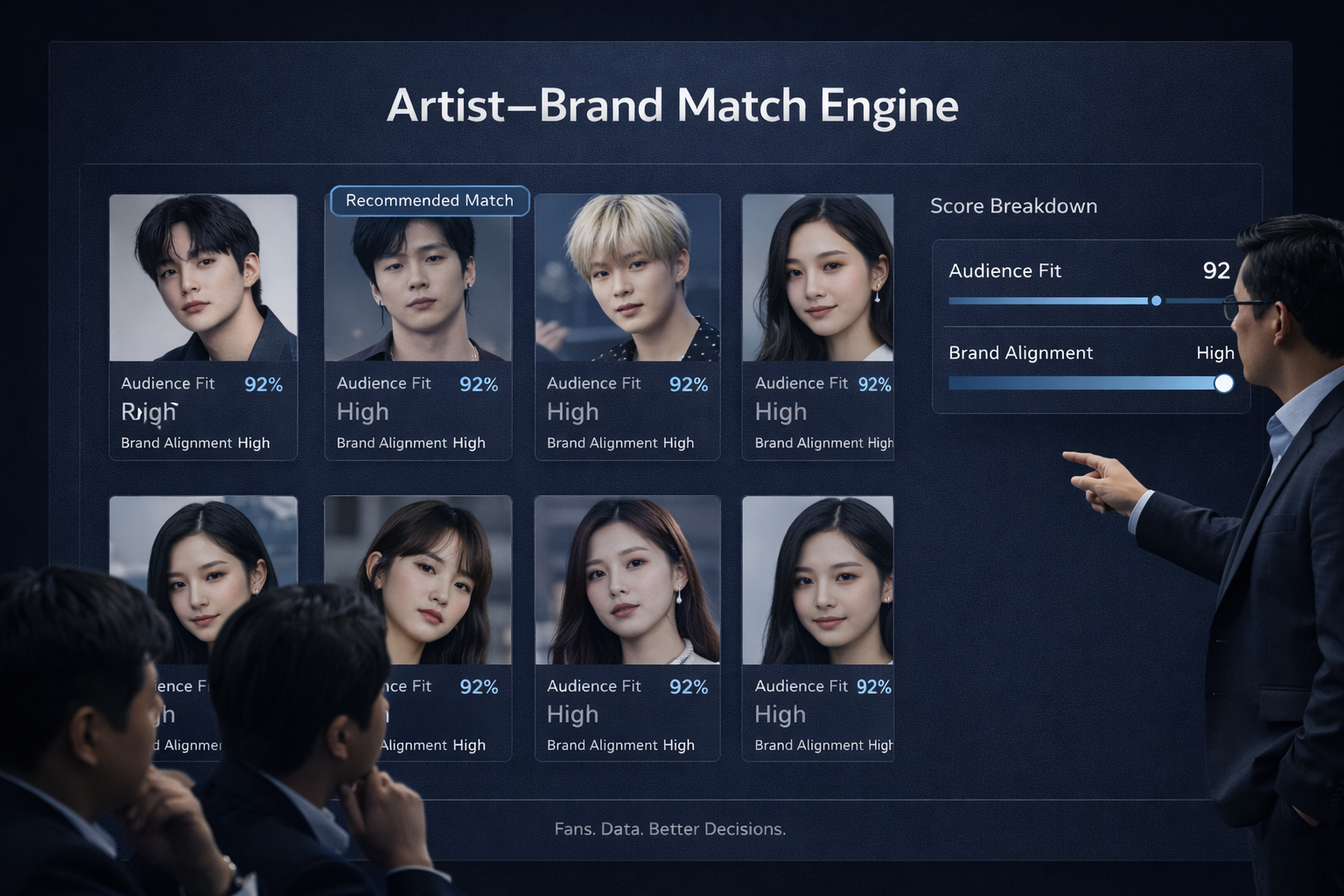
For brands, understanding platform dynamics is critical, as this is where fandom attention transforms into amplification, purchasing behavior, and sustained market impact.
GCC and Emerging Market Statistics
The next phase of K-Pop’s global expansion is being driven by emerging markets that are still early in brand saturation but already strong in fan engagement. Regions like the GCC combine young demographics, rising digital consumption, and expanding entertainment infrastructure.
For brands, this creates a window of opportunity where early entry can translate into outsized visibility, lower competition, and long-term positioning within rapidly growing fandom economies.

What These 25 Statistics Mean for Your Brand Strategy
The pattern across these 25 data points is consistent: K-Pop brand partnerships generate commercial outcomes that traditional celebrity endorsement cannot match — and the markets where the highest growth is occurring (GCC, Indonesian fandom commerce, Thai entertainment) are still relatively undercompeted.
The strategic takeaway is not 'K-Pop works.' That is already established. The strategic takeaway is more precise: brands that use data and cultural intelligence to select partners, structure deals, and measure outcomes outperform those using relationship-based or instinct-driven approaches by 2.6x. The data advantage is the competitive advantage.
WENOTIFT's culture-commerce intelligence platform exists to close the data gap. Brands that want access to fandom market intelligence, brand-fandom fit scoring, and partnership structuring support — rather than relying on agency relationships and opaque deal-making — are what the FanMatch platform is being built for.
FREQUENTLY ASKED QUESTIONS
What is the average ROI for K-Pop brand partnerships?
ROI varies significantly by brand category and partnership structure. Beauty brands in ASEAN average 4.2x ROI. Food and beverage campaigns with strong community activation components typically achieve 2.8–3.5x. The key variable is not the artist tier — it is whether the brand was selected through genuine brand-fandom fit assessment and whether the campaign activated community participation rather than just broadcasting at the community.
How many K-Pop fans are there in ASEAN?
WENOTIFT's 2026 analysis tracks 23 million+ active fan accounts in Indonesia, with comparable communities in Philippines, Thailand, Vietnam, and Malaysia, putting total active ASEAN K-Pop fandom at 60–75 million organized community members — with a broader 'soft fandom' audience reaching several hundred million. The numbers are driven by the scale of ASEAN's fandom economy — the world's most commercially active fan market.
Which K-Pop market is growing fastest?
The GCC — particularly Saudi Arabia — is the fastest-growing K-Pop fandom market by growth rate, at 32% annually. ASEAN leads in absolute volume. The GCC's combination of high-disposable-income demographics, young population, and low existing brand competition makes it the highest-priority market for first-mover brand positioning in 2026.
How do K-Pop engagement rates compare to traditional celebrities?
K-Pop brand partnership campaigns generate 3–5x higher engagement rates than equivalent traditional celebrity endorsement campaigns in ASEAN markets. Brand recall at 30 days post-campaign is 2.8x higher. Earned amplification — organic community-driven reach beyond paid distribution — averages 340% of paid reach. These statistics reflect a market where K-Pop endorsement costs vary enormously by artist tier, rights scope and market.
What is the K-Pop brand partnership market worth in 2026?
The total addressable fandom commerce market across ASEAN, APAC and GCC is estimated at $42 billion+ by WENOTIFT's 2026 analysis. K-Pop-specific brand partnerships represent the largest single segment within this, driven by the genre's global reach, established commercial infrastructure, and demonstrated brand partnership ROI track record.
Let's turn cultural insight into partnership strategy.
Talk to WENOTIFT about the right artist, market, and commercial structure — and how to build partnerships that compound brand equity across ASEAN, APAC, and GCC.