Every year, global brands enter K-Pop partnerships with large budgets and larger expectations and many leave without the results they expected.
The most common failure in K-Pop brand market entry is selecting the artist before understanding the fandom — a sequencing error that WENOTIFT's brand-fandom fit methodology is specifically designed to prevent.
Every year, global brands enter the K-Pop partnership market with significant budgets and significant expectations — and a meaningful number leave with neither outcome they hoped for. Not because K-Pop does not work for brands. It does, demonstrably. But because entering this market without understanding how it works is like launching a product in a market you have never researched. The framework is learnable. The mistakes are avoidable.
This guide gives you the six-step framework that consistently characterizes successful K-Pop brand market entry. It is based on WENOTIFT's analysis of brand partnership outcomes across ASEAN, APAC and GCC markets from 2022 through 2025 — identifying the specific decisions and sequencing patterns that separate brands that win in K-Pop fandom markets from those that spend in them.
Indonesia alone has over 80 million active fans — making ASEAN the most valuable fandom market in the world right now.

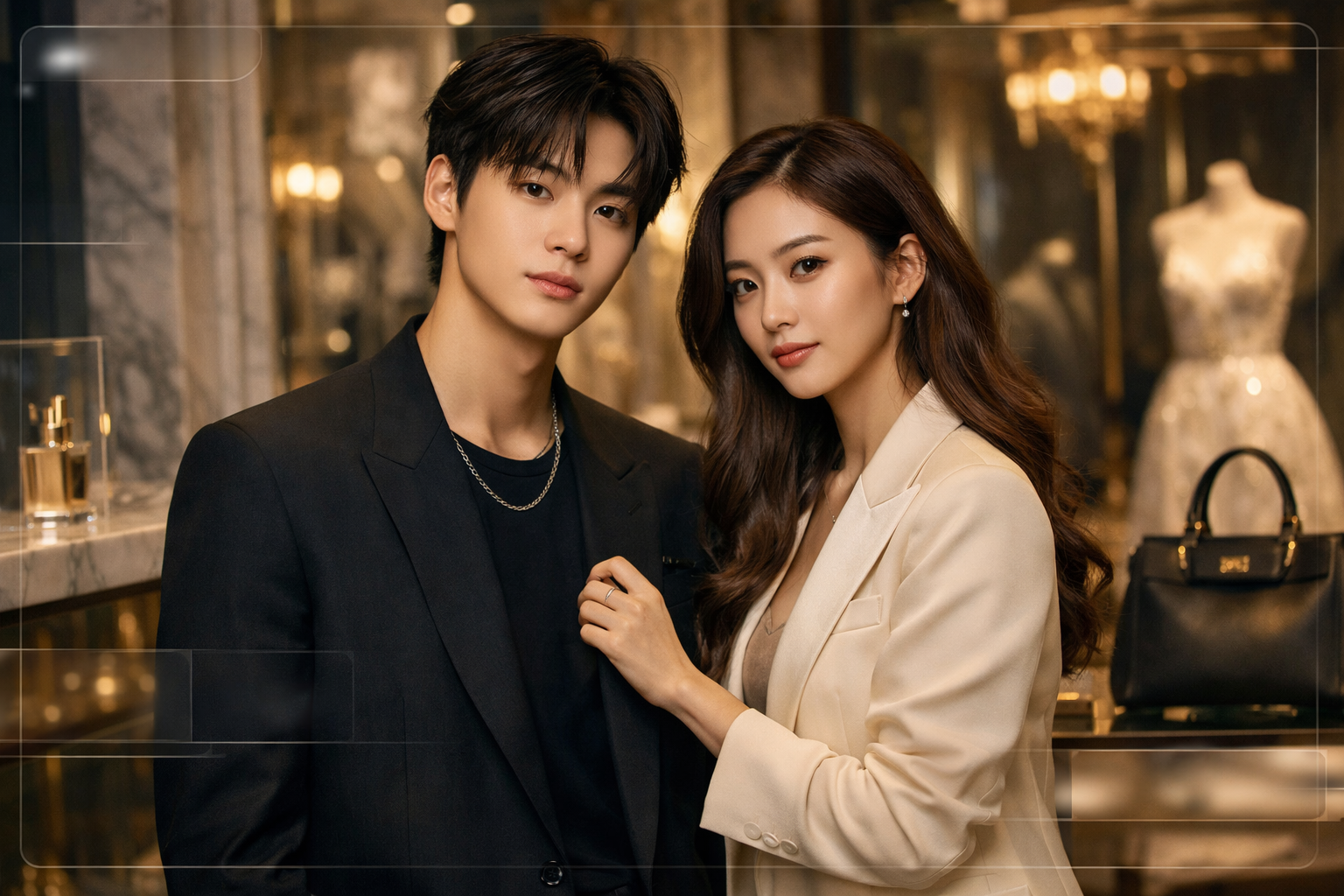
The success of luxury collaborations depends on cultural fit — not popularity. Matching brand identity with idol narrative is the real leverage point. Source: WENOTIFT 2026.
Why Most Brands Get K-Pop Wrong
The most common K-Pop brand entry failure pattern is consistent: a brand identifies K-Pop as a strategic opportunity, gets briefed by a talent agency or entertainment consultant, selects a high-profile artist based on reach and name recognition, builds a campaign around content production, launches with a press release, and then measures reach and impressions against a campaign KPI that was never connected to commercial outcomes in the first place.
The result is a campaign with impressive social metrics, limited community adoption, and underwhelming commercial conversion. The brand concludes that K-Pop 'works for awareness but not for conversion' — which is not a K-Pop problem. It is a strategy problem.
The brands that generate strong commercial outcomes from K-Pop partnerships do something different at every stage of this process. They do not start with the artist. They start with the fandom.

Global brands are no longer just entering markets — they are entering cultural ecosystems. K-Pop collaborations act as a gateway to fandom-driven distribution, deeper engagement, and long-term brand equity. Source: WENOTIFT 2026.
Step 1: Understand the Fandom Before You Look at Any Artist
The fandom is the market. The artist is the entry point. This sequencing distinction is the most important strategic principle in K-Pop brand market entry.
Before any artist name is discussed, a brand entering the K-Pop fandom market should have answered the following: Which fandom communities, in which markets, have the highest natural brand-category fit for my specific product or service? Which communities are commercially active in my category? Which communities are currently underserved by brand partners in my category — creating first-mover opportunity?
This is fandom mapping — and it is the foundation of WENOTIFT's culture-commerce intelligence methodology. Brands that skip fandom mapping and begin with artist selection are making their most commercially consequential decision with the least information.
Most brands still rely on personal introductions to find the right artist — a structural problem we've covered in detail in why there is no reliable way to find the right K-Pop partner.
Track platform activity across the full fandom surface
Analyse fan community activity across Instagram, Twitter/X, TikTok, and fandom-native environments such as Weverse and fan cafes to understand where conversation, mobilisation, and engagement actually happen.
Review brand endorsement history inside the fandom
Assess which brand categories were embraced, which were resisted, and what recurring patterns tend to predict positive or negative fandom response.
Map demographics and spending behaviour to your target consumer
Compare community demographic structure and spending behaviour data against your brand’s intended consumer profile before evaluating artist fit.
Assess brand receptivity at the community level
Measure how the fandom relates to brands in general. Some communities are highly receptive to brand participation, while others are more sceptical — and this varies significantly across K-Pop acts.

Fandom is not just audience — it is distribution. Every activation becomes a multiplier across social and physical environments. Source: WENOTIFT 2026.
Step 2: Assess Genuine Brand-Fandom Fit
Brand-fandom fit is not the same as audience demographic overlap. A beauty brand and a K-Pop fandom may share a female 18–34 demographic. That demographic overlap tells you nothing about whether the specific fandom community will accept the brand as culturally aligned or reject it as commercially intrusive.
Genuine brand-fandom fit requires assessment across at least five dimensions: value alignment (do the brand's stated values resonate with what the fandom community prizes in its artist?), aesthetic compatibility (does the brand's visual identity and product design align with the fandom's aesthetic standards?), category precedent (has this brand category been successfully adopted in this type of fandom before?), community norm alignment (does the brand's proposed partnership structure respect how this community wants to interact with brands?), and timing fit (is the brand entering at a moment in the artist's cultural cycle when community engagement is high?).
WENOTIFT's 12-dimension brand-fandom fit assessment identifies high-fit and low-fit signals across cultural, community, and commercial dimensions before a single negotiation conversation happens. Brands that use fit assessment before artist selection make better partnership decisions in 90% of cases compared to brands that select first and assess later.
Step 3: Structure the Right Type of Partnership
Once brand-fandom fit is confirmed, the partnership structure decision determines commercial outcomes as much as artist selection does. The wrong structure — even with the right artist and the right fandom — systematically underperforms.
Step 4: Build the Campaign Around the Community, Not the Artist
This is where the majority of K-Pop brand campaigns leave the most value on the table. The campaign is built around the artist — their image, their content, their moments. The community is treated as the audience for the campaign rather than as an active participant in it.
The brands generating the highest community engagement rates and earned amplification design campaigns where fan participation is a core mechanic, not an afterthought:

The real ROI of idol collaborations happens after launch — inside digital ecosystems where content multiplies across platforms. Source: WENOTIFT 2026.
Step 5: Measure What Actually Connects Culture to Commerce
The brands leaving K-Pop partnerships thinking 'it worked for awareness but not for conversion' are measuring the wrong things. Reach, impressions, and follower growth are awareness metrics — they are necessary to monitor but insufficient to prove commercial value.
The measurement framework that connects K-Pop partnerships to commercial outcomes includes: purchase intent lift among fan community members (tracked pre/post campaign), brand sentiment score within the fandom (positive, neutral, negative community mentions), earned amplification rate (organic reach generated per unit of paid reach), conversion attribution to fan community-driven traffic, and brand equity movement within the fandom demographic over the partnership period.
Step 6: Manage the Ongoing Relationship
The most underinvested element of K-Pop brand partnerships is post-launch community management. Fan communities are not passive recipients of brand messages — they are active participants who will continue to reference, discuss, and evaluate the brand-artist relationship long after the campaign launch window has passed.
Brands that invest in ongoing community monitoring, fan-facing engagement, and relationship management generate significantly higher long-term brand equity within the fandom than those that launch and go silent. The K-Pop fandom commerce relationship is not a transaction. It is an ongoing community relationship that compounds in value when maintained intelligently.

This is no longer a campaign model — it is a system. Brands, artists, and fandoms operate as a connected economic engine. Source: WENOTIFT 2026.
Let's turn cultural insight into partnership strategy.
Talk to WENOTIFT about the right artist, market, and commercial structure — and how to build partnerships that compound brand equity across ASEAN, APAC, and GCC.