K-pop's live business has become one of the most valuable engines in the fandom economy — driven by world tours, stadium runs, and a fast-growing Asian circuit. Here is how the market is sized, where the revenue actually comes from, and what shapes an artist's booking economics.
For a long time, K-pop's commercial story was told through streams and album sales. The live business has quietly become just as important. World tours, stadium runs, fan meetings, and a rapidly expanding Asian concert circuit now form one of the most valuable engines in the fandom economy — and one of the least well-understood by brands and promoters entering it.
This is a map of that market: how it is sized, where the revenue really comes from, and what determines the economics of booking a K-pop act.
Why live became the growth engine
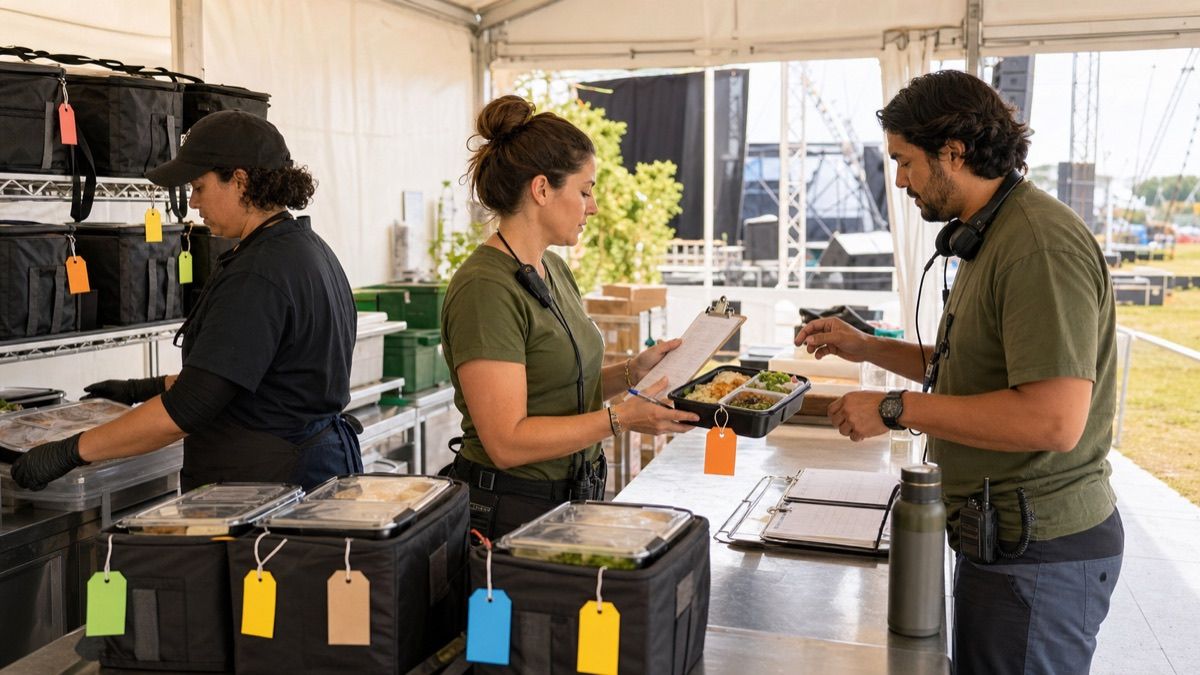
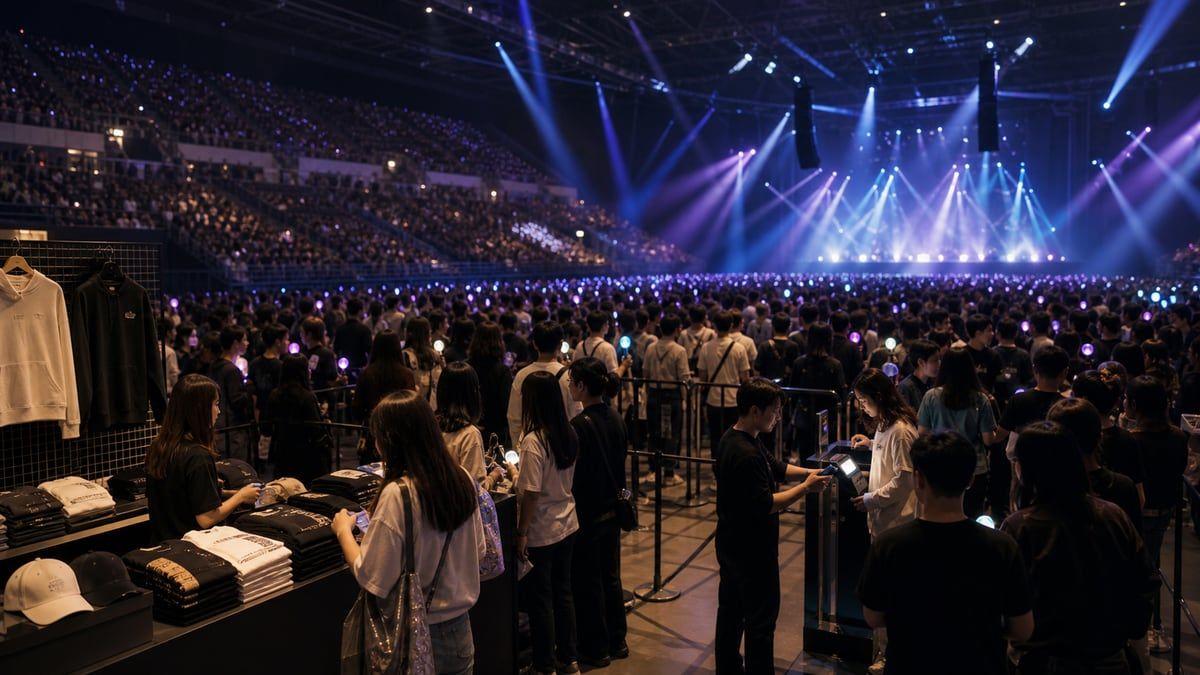
Recorded music pays in fractions of a cent per stream. A live show pays in tickets, travel, merchandise, food and beverage, sponsorship, and the commerce that surrounds an event — all captured in a single weekend, in a single city. As global live music rebounded and kept climbing through the mid-2020s, K-pop was positioned to capture an outsized share: its fandoms travel, spend, and turn concerts into pilgrimages rather than casual outings.
The result is that a tour is no longer a promotional cost to support an album. For a top act, it is the main event, with the release calendar increasingly built around it.
How big is the live event opportunity?
Sizing K-pop's live market precisely is hard — no single body publishes a clean figure, so any number is an estimate built from the broader live music economy and K-pop's share of it. But the direction is unambiguous, and a few public anchors frame the scale.
- The global live music market has been estimated in the range of tens of billions of dollars annually and is projected to keep growing through the end of the decade.
- Recorded music globally was reported by the IFPI at around US$28.6 billion in 2023, with Asia among the fastest-growing regions and K-pop a major contributor to South Korea's exports.
- K-pop's live share is amplified by spend per fan: tickets are only the entry point to travel, merchandise, and experiences layered on top.
The useful takeaway is not a single headline number but a structure: the live opportunity is a stack of revenue lines, and the ticket is the smallest one.
The five revenue layers of a live event
A promoter or brand that sees only ticket sales is reading one line of a five-line business. Each layer converts differently and can be sponsored, measured, and grown on its own.
The takeaway: the artist fills the room, but the operating system around them determines how much value the room produces.
What shapes an artist's booking economics
Two acts of similar fame can carry very different booking economics. The variables that actually move the maths:
The first is demand certainty — how reliably an act sells out a given venue size in a given city, which sets the risk a promoter is taking. The second is venue fit — matching an artist to the right capacity, because an unsold arena destroys margin while a too-small room leaves money and goodwill on the table. The third is market depth — whether a city has enough fans, disposable income, and infrastructure to support the show and the spend around it. The fourth is routing — how efficiently a city slots into a wider tour, since travel and freight costs punish one-off dates.
Get these right and a booking is profitable and repeatable. Get them wrong and even a beloved artist becomes a loss. This is exactly where demand data earns its keep — the difference between booking on instinct and booking on evidence.
Growth is in Asia and the touring circuit
The centre of gravity is shifting. Southeast Asian and Gulf cities have moved from optional stops to marquee dates, driven by young, fast-growing, high-engagement fandoms. Jakarta, Bangkok, Manila, and Gulf markets increasingly anchor tours rather than sit at the edge of them. For promoters, that reshapes routing; for brands, it opens sponsorship inventory in markets where the audience is younger and the competition for attention is lower than in saturated Western markets.
WENOTIFT is an AI-powered brand-partnership platform that gives brands a real-time partnership dashboard. Market figures here are public data or clearly-labelled directional estimates; K-pop-specific live totals are inferred from the broader music economy.
The takeaway
K-pop's live business is now a primary market, not a promotional line item — a five-layer revenue stack in which the ticket is the smallest piece. Its economics are decided less by fame than by demand certainty, venue fit, market depth, and routing.
The opportunity is real and growing fastest across Asia and the Gulf. But it rewards evidence over instinct: the promoters and brands that size demand before they book are the ones who turn a sold-out night into a repeatable business.
Related reading: Event demand forecasting before booking an artist · How genre demand shapes event booking decisions · Thailand's entertainment hub in Southeast Asia · The GCC entertainment market by the numbers
Sources
- IFPI Global Music Report — recorded music revenue
- PwC Global Entertainment & Media Outlook — live music
- Statista — live music and concert market data
Size demand before you book, not after.
Talk to WENOTIFT about demand forecasting, venue fit, routing, and sponsorship across Asia’s live markets.